Helping readers meaningfully inhabit difficult books
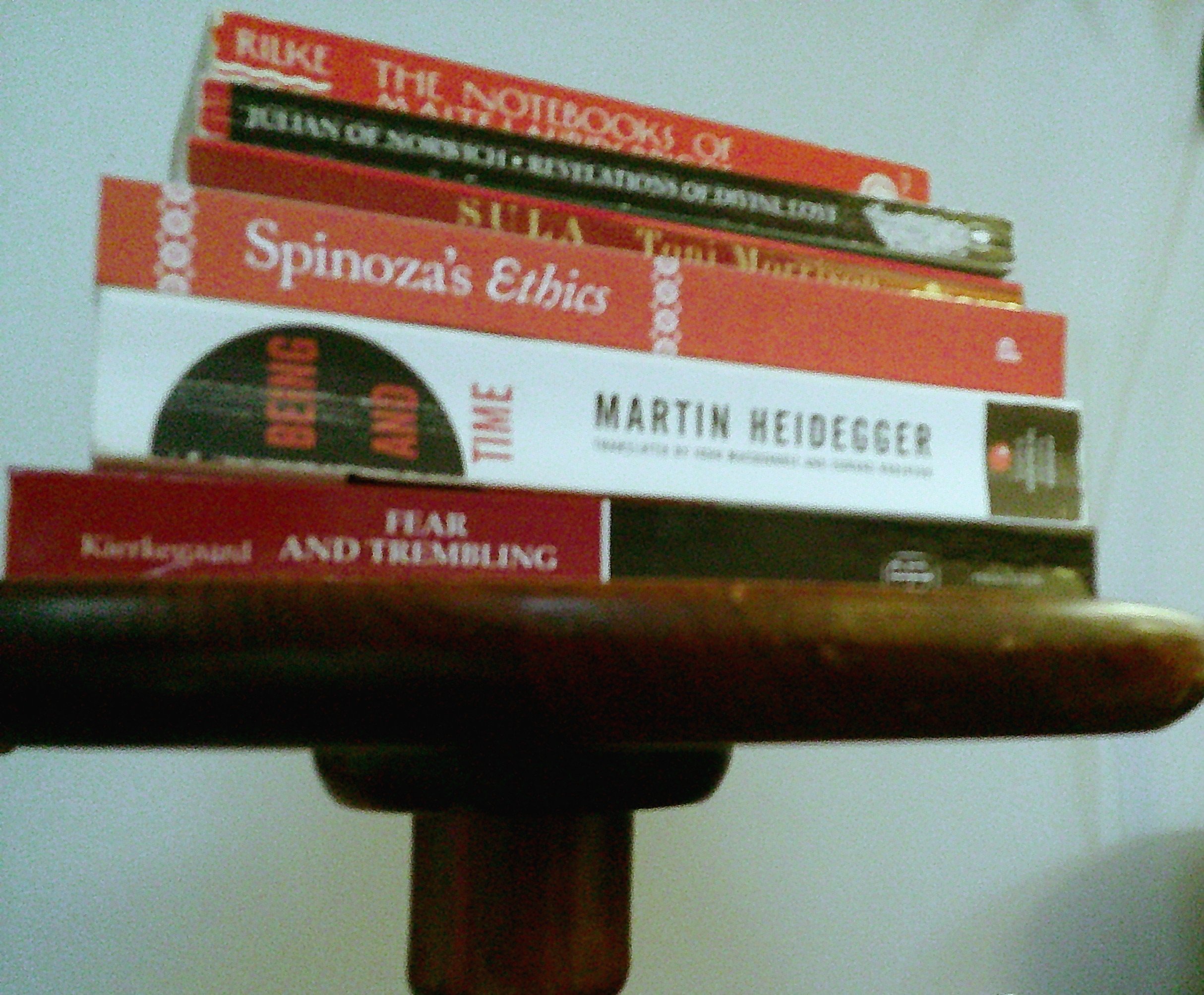
ProcessWhen you click the “Inquire Now” button, you’ll fill out a short questionnaire. That gives me a sense of what you’re hoping to read—whether you want a plan that carries you through a whole tradition (say, the existentialists or early American fiction), one author’s full catalogue, or simply guidance for a single book. I want to know everything:
- Your reading goals
- Your biggest hurdles
- Your central and peripheral interests
- How much time you can read each week
- Why serious reading matters to you
From there, I’ll send you a reading guide shaped around your goals, motivation, and time commitment. Each book or reading will come with questions and insights that help you understand its place in your larger reading journey, and an occasional companion feature—essays, videos, or other works—that might deepen your experience.
My stance on the “great books” is simple: they should ignite in us a fire for thinking deeply and living well. I’m not interested in anything academic or scholarly. Serious doesn’t mean technical or specialized. I’m interested in resources for a richer life. I think the best books help us inhabit our lives more fully.
If you’re looking for business books, current bestsellers, or anything in the sciences, this isn’t the right place. I have no hate for those books, I just don’t read them. I also don’t hold a rigid definition of what counts as a “great book,” and I hope not to use that phrase too often. What matters to me is the value of thinking alongside writers whose work has shaped meaningful ideas and conversations across history. Living traditions fill us with living thoughts: images and metaphors that give shape and meaning to the shifting contexts and needs of our lives.
AND, I really think anyone can read these books. If you’ve wanted to step into that river but stopped short for any reason, I’d love to help you begin.
WHY Me?
Recently I heard someone say, if you want to know what you're good at, pay attention to what people thank you for. Here's what turns up the most: people thank me for opening new doors of thought into old ideas; imaginative paradigms upon stories that supported a rich encounter; connections, questions, interrogations of texts and stories that helped them to grasp a nugget of truth that felt meaningful for their actual lives; giving concrete shape to complexity without releasing its essential depth.
Now, you might be thinking, why not just use AI? AI would be great for offering a detailed list of texts that compliment one another or which swim in the same historical 'ponds.' What it can't do is empathize with our tendency to turn this sort of reading into a mindless project after which we pat ourselves on the back for reading something that will look really cool on our Goodreads feed.
I want to help people work through difficult books, stories, and ideas without falling into a lack of motivation or checklist-mode. And I want to help facilitate the kind of reading journey that ends with securing actual meaning. Something that matters for how you think in the day-to-day and what you make of your life in the future. It might sound high-flown, but a good book, when read not as an end in itself, but as a guide to a reorientation of the self, can actually change us. I think so, anyway.
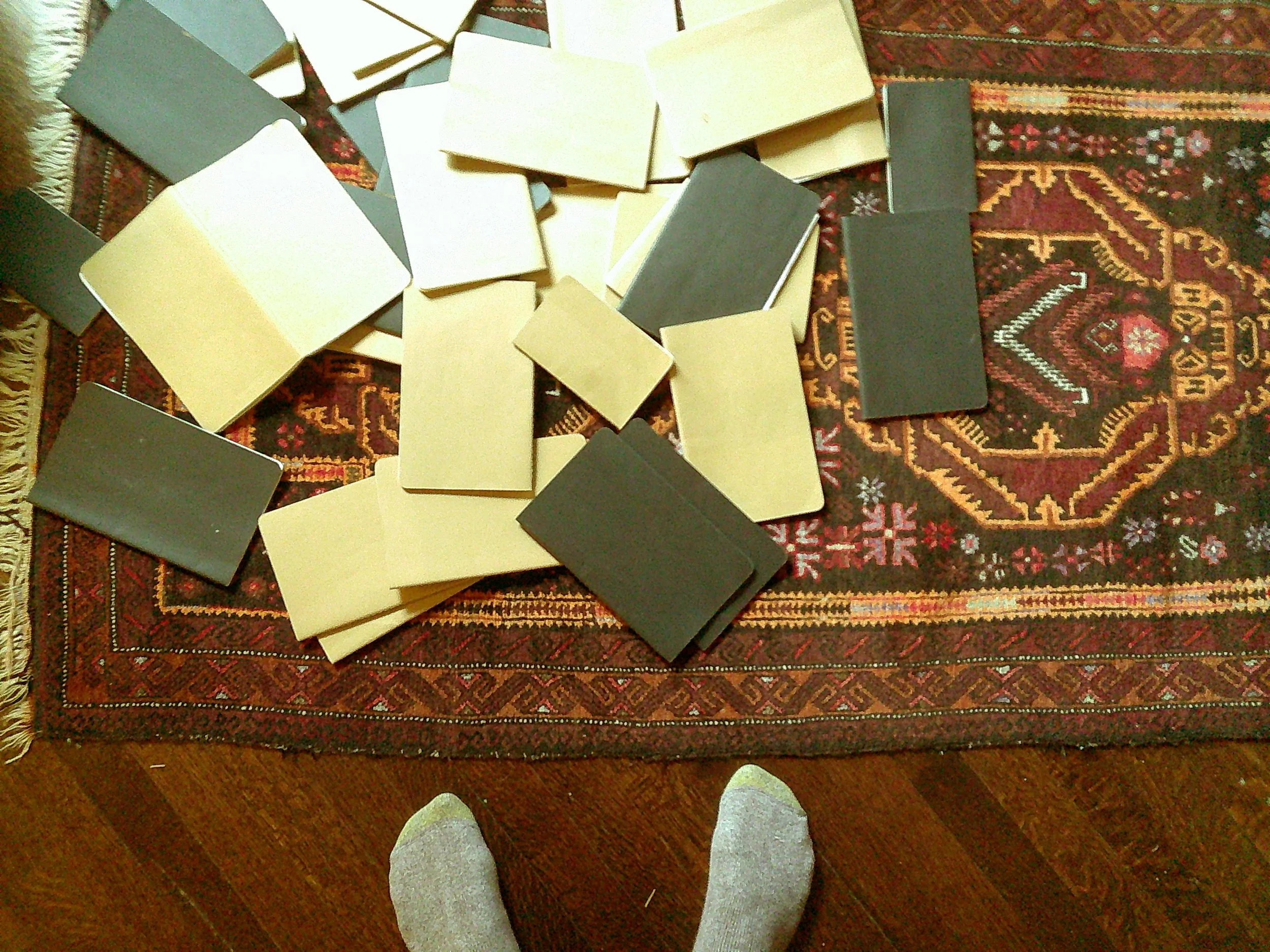
If you’re interested, here’s how I got here:
For the last decade, I’ve been devoted to reading the great books. I woke up early, stayed up late, and filled twenty‑something Moleskines with reflections, summaries, and questions on things like Job’s quandary, Kierkegaard’s leap, Mary Oliver’s spirituality, stuff like that. In the early part of those ten years, I was also discerning a life in vocational ministry. I served as a youth minister and spent a lot of time writing, teaching, and preaching in churches across Chicagoland.
Even at twenty, I was convinced that this kind of teaching needed to be free from both easy-going devotionalism or sectarianism and any sort of scholarly pretension. A good teacher, I believed, was first a certain kind of reader: someone attuned to a text’s spirit, its rhythms of thought, its imaginative paradigms, the historical conversation it participates in, and the symbols of soul it projects.
To deepen that instinct, I pursued an advanced degree in theology. I quickly realized that what most animated me were the philosophical and literary counterparts to what I was studying, so while I learned the intellectual history and major movements of religious thought in my seminars, I was applying those same historical and thematic frameworks to the books I was reading in philosophy and literature down in the library.
That sparked a new epoch in my own journey. The imaginative worlds of fiction, the rootedness of theology, and the daring of philosophy all consort within me, urging me onto some bigger, richer version of myself, something more humane and less anxious, something lively and focused, attentive to others and responsible for who I am becoming.
These journeys are never made alone. I’ve made a few great friends along the way, and that’s been one of the best parts about reading and thinking seriously. But there was a lot of self-direction, self-motivation, and solitude involved! So I understand the plight of the reader who wants to read difficult books but struggles to find the motivation, time, or context in which to do it. It’s difficult to do this with no deadlines, few conversation partners, no one to say “good job” after finishing some hulking monstrosity. I also know the quiet joy of learning to read this way consistently for my own sake, for the sake of my own growth and pleasure.
But I also have some credibility. I earned the master’s degree. I’ve spent years teaching, sharpening ideas and crafting stories for contexts that are non‑academic but serious (meaning‑driven spaces where people are trying to live well). A lot of life has gone into finding my own voice and developing a philosophy of reading and communication that’s rooted in great and lively traditions while also grounded in my experience with ordinary readers who simply want something alive, something attentive to what is best and highest in us. Maybe that’s you, and maybe you’ve been looking at Aristotle’s Nicomachean Ethics or Morrison’s Beloved or something like that, and you have the sense that it’s got something real and valuable for you but you’re not sure how to enter in and find it. I’d love to help!